The Perfect Time to be Nice


We were at the playground, deep into a game in which I was an ogre, our 6-yr-old was my ogre kid, and the big brothers (9-yr-old and 11-year-old) were humans we were chasing. The goal was to catch them so that we could eat them for dinner. 

We were having a blast, running up and down playground structures, jumping, sliding, climbing poles, swinging on ropes, and growling. 

The engagement was high and the excitement was palpable. It was one of those games, where every once in a while a bust of energy shot through you and you burst into high speed. We were at if for two and a half hours before something interesting happened (our 6-yr-old can most often be counted on for something interesting – the others too, for that matter). 

The big brothers were several yards away, on the top of a hill. They were taunting us with some general, “Na, na, na, na, na’s” and their fingers were in the shape of “L’s” on their foreheads. Enough was enough for the kid ogre.

He turned to me and said, “They’re being so mean.”

Even thought they were just playing, he felt it. It was a game, but he felt sad that they were being so mean. Instead of crying, pouting, or quitting, he said, “This is the perfect time to be nice.”

I asked him what he meant by that. He explained. 

Now that we know what it feels like when someone isn’t nice to you, we should be nice to them, so that they don’t have to feel that way. He suggested that, instead of running after them, trying to catch them and eat them for dinner, maybe we should try to get them to be our guests for dinner, and eat vegetables.

The suggestion didn’t sound as fun to the big guys, so we compromised. I would still chase them, trying to catch and eat them, but my ogre kid would try to convince me to befriend the humans and become a vegetarian. Still fun, and we still got to pretend that someone was in danger of being cooked and eaten – a favored play theme among my kids.

We stayed a while longer and continued to have excited fun. 

Later that evening came to me with a big smile (that he was attempting to conceal) and said, “I had a lot of fun playing today.”

I said, “So did I, buddy.”

He said, “Ya, it was a really special time.”

My heart melted. We hugged. I would have liked for that moment to last forever, but as you know, they don’t (one of the reasons I write about them).

Here’s the thing…he’s was so right. When people are not being nice to you, it may actually be the perfect time to be nice to them. It’s healing. Even if they don’t appreciate it in the moment (or ever), it’s healing for you.

Najwa Zebian said, “Today I decided to forgive you, not because you apologized or because you acknowledged the pain you caused me, but because my soul deserves peace.”

Being mean is toxic. Being unkind is uncomfortable and stressful. Being hurtful is frustrating, and it diminishes well-being for both the hurtful and the hurt…both end up hurting.

Being kind is freeing. Being pleasant is elevating. Being friendly uplifts. Being nice is…well, it’s nice. 

We should be nice. In fact, anytime, and all the time, may be the perfect time to be nice. 

Thanks, buddy – you always know just how to deliver the message I need, in the moment I need it. I love you and I love learning from you.

In it together for the kids.

Live. Love. Listen. Learn. Lead. Thanks.
Challenging Catastrophes

The other day I was running late. These days have been extremely long, so I get less time to spend with the kids. I decided several weeks ago that if I was going to be working most of the time, my life would be more in balance if I could at least say “good morning” and “good night” to my crew every day. I’ve been doing some morning work from home (and sometimes sleeping in a bit) so that I don’t have to leave before the kids wake up.

On the “running late” day, I had a meeting that was the same amount of time away as I was. If I got into my car just just as the coffee finished dripping I might have made it, but as you might guess, one of the things that tends to happen when I’m running late is increased forgetfulness. 

I was half a mile down the road before I realized my work phone was still on the kitchen counter. I needed it. So, I resigned myself to being late. I made the next turn-around and headed home.

What a bummer. My heart rate went up and I was flooded with frustration. I don’t like being late. It felt like a really big deal…a catastrophe even. But being late isn’t a catastrophe, it’s a challenge…if that. 

Here we are in a global health crisis, with a foundational layer of catastrophes surrounding each of us, and I’m letting my blood pressure go up because I’m running a few minutes late. There are many things we can latch on to as catastrophes throughout each day…things that simply aren’t.

The thing is, when we’re calm and confident we’re better for everyone around us. When we’re patient and thoughtful, those we serve and serve with benefit. Energy transfers. Heightened, negative attitudes and behaviors deteriorate well-being. We all know that, and with some focus and dedication, I contend that we are all capable of brining positive energy to any situation, even if we have to shift from impulsive negative energy. Breathing, and focusing on breathing tends to help me. Listening, too. When I listen instead of talk, I tend to be more thoughtful. 

As I pulled back up to the house I noticed that my wife was at the door, and our 6-year-old was waking across the porch with my work phone in his hand. This was not a catastrophe, this was an opportunity to get another hug from my kid. 

There’s actually a term for creating additional crisis during challenging times. The term is “catastrophizing.” We catastrophize when we assume the worst, and when we do, we bring crisis energy into the cultures in which we live and work. 

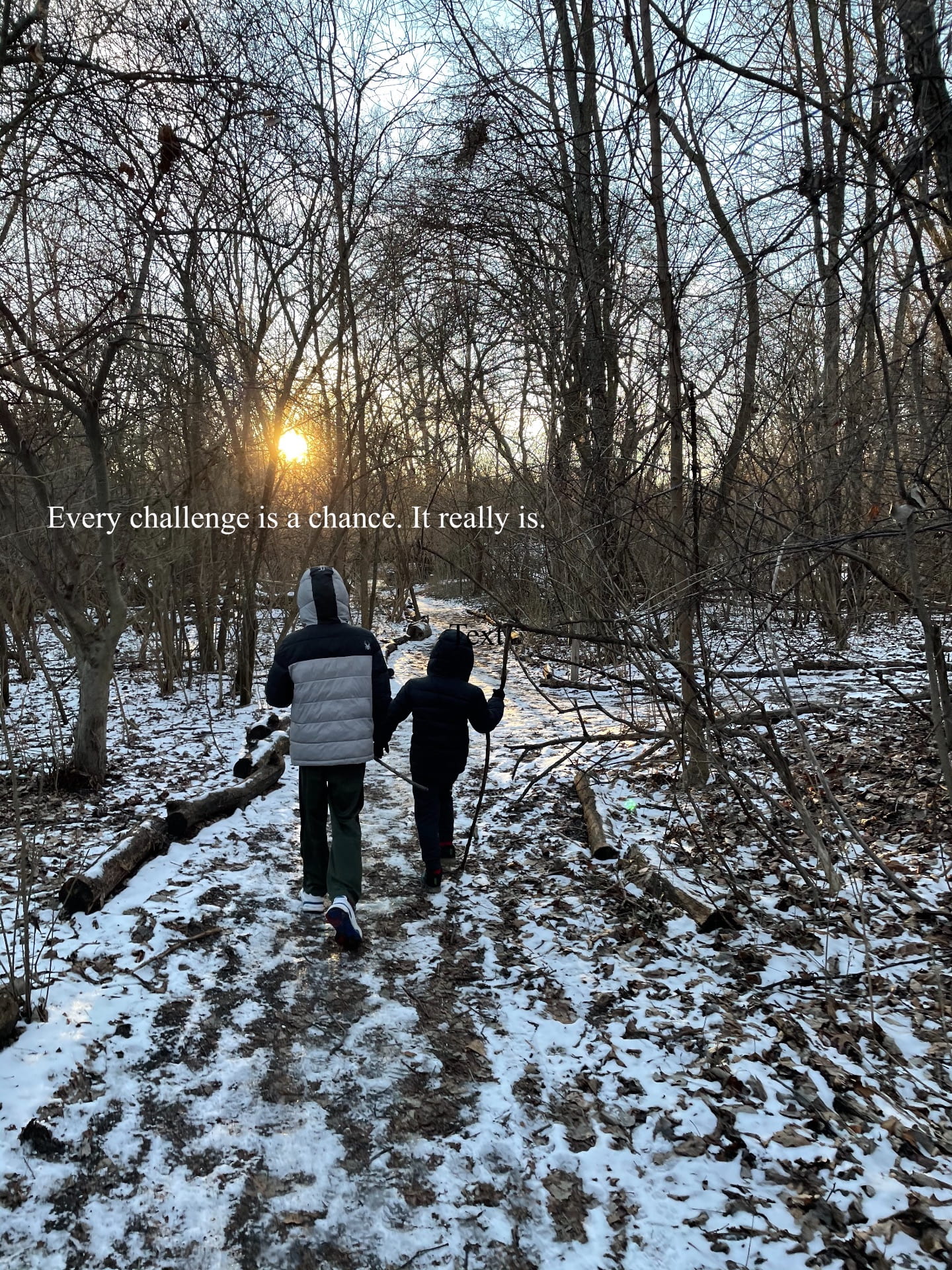
So, here’s the deal, when we feel our blood pressure going up, when our hearts start beating faster, let’s take a step back instead of a step forward. Let’s challenge the notion that we’re dealing with catastrophes. Let’s consider that any given catastrophe might actually be an opportunity. Every challenge is a chance. It really is. 

Some of these catastrophes are absolutely real, and it’s also real that when we approach critical situations with calm confidence, we are more likely to achieve positive outcomes. We can influence the culture and climate of the spaces we occupy in positive ways buy challenging catastrophes instead of finding them in places they really don’t belong. When running late is actually an opportunity for another hug, it’s a gift, not a catastrophe…and truly, every challenge is a chance – we should work hard to take them when we can.

In it together for the kids.

Live. Love. Listen. Learn. Lead. Thanks.
What Keeps Me Up At Night

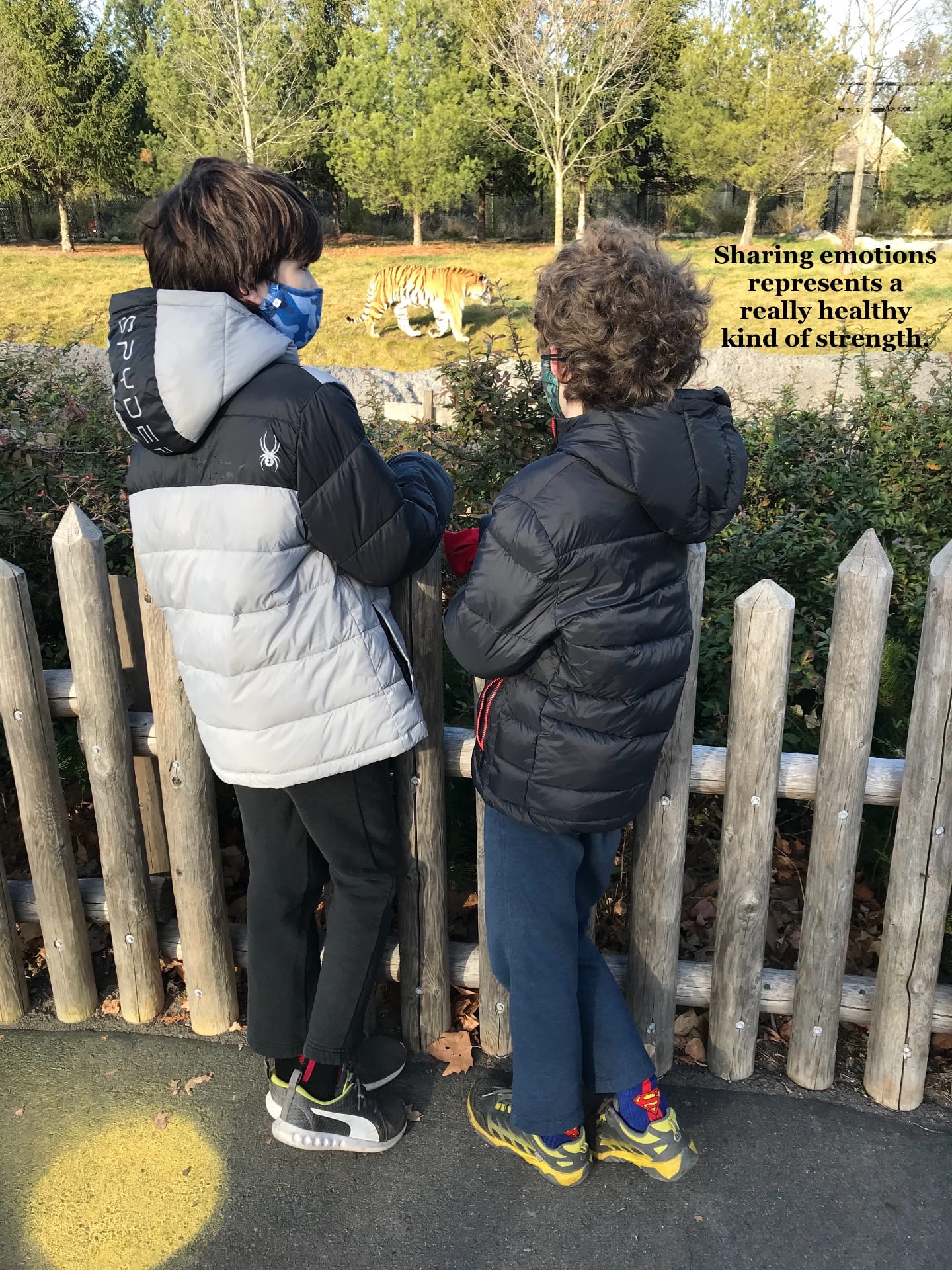
I was walking with our 11-year-old at the Zoo yesterday. He said, “Daddy?”

I said, “Yes?”

He said, “What if aliens use the same words as us, but they mean something completely different?”

I didn’t need to ask for clarification…he went on before I could,” I mean, like, what if the word ‘want’ means ‘pickle’ to aliens, or what if the work ‘play’ means ‘book?’

His voice began to shake a bit, his energy level lifted, and his shoulder and arms started oscillating up and down, and back and forth.

He continued, “…and, like when they say that no two snowflakes are the same, that’s impossible. There have been so many snowflakes. It just ins’t possible that none of them are the same.”

He took a sharp breath and kept going, “…and if aliens do use the same words as we do but the means something different, they wouldn’t be able to understand anything we’re talking about. They might think we’re saying something different than what we’re actually saying. It would be so confusing!”

He started to make that face you make when you feel like crying but you’re not quite there. The kind of face you make when you’d like to be there…when a good cry might be just what you need.

He went through a series of equally interesting and unique diatribes on a variety of seemingly unconnected subjects before taking a deep breath, looking up at me, and letting me know, “That’s what keeps me up at night.”

Then, he said something I didn’t expect.  It was just about the most obvious thing he could have said, and I’m not sure why I didn’t expect it, but I didn’t.  He said, “…and I’m really tired of COVID.”

Aha.

Duh.

Surprise, surprise…our 11-year-old is tired of living his first year of middle school without having seen the inside of an actual school.

He’s tired spending time with his the top third of his friends’ heads from six feet away.

He’s tired of living every waking moment trying to start the next phase of his physical, emotional, social, and spiritual life surrounded by his mom, his dad, and his three younger siblings.

He’s tired of wondering if he’ll get sick.

He’s tired of so much being so far out fo his control. 

Or, maybe he’s truly and deeply concerned about the possibility that us and aliens seem to have no hope of ever understanding one another. Yah, that’s probably it.

They may not be telling us exactly what’s on their minds in every moment.

They may not know.

It might not always, or even ever end with, “…and I’m really tired of COVID.” 

It may not matter.

It may only matter that we take whatever time we can to be there. 

We can’t relieve our children of the inevitable hurt they’re going to suffer repeatedly over the course of their lives, but we can be there to listen as they process. We can make clear that we care, that they are not alone, that even challenging is also a chance, and that sharing emotions represents a really healthy kind of strength.

Listen. Make time. Genuinely listen. Value, celebrate, respect, model, guide, and validate. 

Kids of this COVID generation may turn out to be the most resilient human beings in history. They may be the ones to actually be the change we want; the change we need.

Heck, they may learn how to communicate with aliens. 

We can help them with our hearts, our minds, and our ears.

Funny thing, when we do…it helps us, too.

In it together for the kids.

Live. Love. Listen. Learn. Lead. Thanks.
My 2020 Fifth Grade Commencement Address in Speech and Song

This past week I offered a commencement address honoring the first group of students I met as kindergarteners when I became an elementary school principal.

Needless to say, this is very special moment in time for me. 

I remember the feeling of being “the new principal.”

I remember feeling like I had a lot to learn about the job, and that I had a lot to learn about the kids. 

Caring for children from the age of 4 or 5 through the age of 10 or 11 is a different thing than caring for children beginning when they’re more advanced along their educational journey. 

Along with the families and staff who are my partners, I feel like I’ve played a role in raising these kids, and the truth is, I’m extremely proud of them. 

To be clear, I’m proud of every student I’ve met along this journey. 

Still, for these kids, I’m the only principal that they’ve had.

So this year, as I considered a commencement address, I sat and looked at the cabinet in my office which is lined with the handprints these 10 and 11-year-olds gifted me when they were 4 and 5-year-olds. 

I thought of their hands then, what their hands have done since, and what their hands, hearts, and minds are capable of doing now. 

I truly believe in the power of possibility, and I truly believe that these uniquely challenging times will foster a type of resilience that will manifest in positive world change generated from the hands, hearts and minds of this group of kids. 

So, in this year’s address I spoke some words from my heart, and remembering that music can deliver a message in alternate ways, I decided to sing as well. 

I sang a song that I wrote for all of the children of this generation. All of those who are engaged in any transition, moving from grade level to grade level or to from school to school, and in particular, for the four children my wife and I spend our days with, watching them thrive in an environment that completely shifted under their feet. 

Kids are resilient, and they learn how to grapple by having things to grapple with.

This generation of kids, at every level, are going to be sophisticated, compassionate, productive, and positive grapplers. 

As I watch the world go by with slow change in the rearview mirror and all around me, I have every bit of confidence that this generation will be the one to see our hopes and dreams of widespread peace, love, unity, inclusion and belonging fulfilled.

This is my message as I bid our fifth grade graduates a safe, joyful, and balanced journey forward. 

This is my message to all children. 

This is my message to anyone who’s interested.

In it together for the kids!

Live. Love. Listen. Learn. Lead. Thanks.
The Importance of Embracing These Moments

A few weeks into this changed environment I looked back and realized my emotional bandwidth has been as broad as ever. Turns out a global pandemic sets the stage for emotional overload. Go Figure.  

Also, this era-defining moment has presented me with an opportunity to progress monitor my resilience and emotional wherewithal. Now, I’ve found a flow.  

I believe one reason I’ve been able to find this flow is the experience of accepting and intentionally navigating a wide spectrum of emotions.  

The first couple of weeks were mostly about prep work, setting things up, getting things ready, figuring out what structures work best for me to function in my roles as a principal, a husband, and a father.

Lorelei and I imagined, constructed, reimagined, refined and implemented a system and a consistent pace in our house. At this point, the kids have all but taken both over with a good deal of independence. Our days are flowing relatively smoothly. It adds a foundation of balance. 

I’ve spoken and written about the structured blueprint of our stay-at-home life on multiple occasions since the beginning. I’ll mention some particulars here as a side-note.

We have four kids, all elementary age. Our days begin with breakfast at 8:30 am, followed by a series of 45 minute sessions with10 minutes of transitional time for snacks, stretches and bathroom breaks in between each session. The sessions include “School Work,” “Fresh Air,” “Read and Relax,” and “Free time.”  

We maintain these structures with a foundation of flexibility.  We use the Zones of Regulation to see that we’re focused and ready to go for each session. If were not, we flex. We have a lot of conversations. We give the kids ownership and autonomy through which they’re demonstrating some wonderful independence.  

The few days I wrote about above came shortly after these structures were solidly in place, just after I was able to take my first breath, knowing we were on the right path with regard to some normalcy and balance for the kids. 

After the initial setting of the stage I was able to turn to my own feelings about the challenges we’re facing. In doing so, my broadened emotional bandwidth came into play. I was really sad for a few days. 

At first, I didn’t completely understand the sadness, where it came from, or why it was so intense. In hindsight it would seem obvious, but it wasn’t. I wanted to be “stronger than that,” and I had some trouble letting myself accept and appreciate that strength may not be in how you feel, but in how you respond to what you’re feeling. Upon letting go and falling into my emotions, I realized they needed my attention. 

Paulo Cohelo said, “You drown not by falling into a river but by staying submerged in it.”

What seems to have worked for me, and what I recommend, is that when we fall into a river of emotion, no matter the emotion, we recognize and accept that we’re there. 

I recommend that we look around ourselves, inside and out, for methods and means to rise to the surface and emerge. The difficult journey out might take an hour, it might take a day, and it might take a week. If it takes longer than that, I recommend asking for and embracing help from others.  

In my case, during this round of processing, it took just over 2 days. I emerged with enhanced strength and clarity of vision. I’ve since been in the flow I mentioned above.

I suspect I’ll fall into a river of emotion again during this challenging and unusual time, however it unfolds. I hope that when I do I can see clearly the value falling into the river has, along with the value of finding ways to emerge. That’s my plan, anyway.

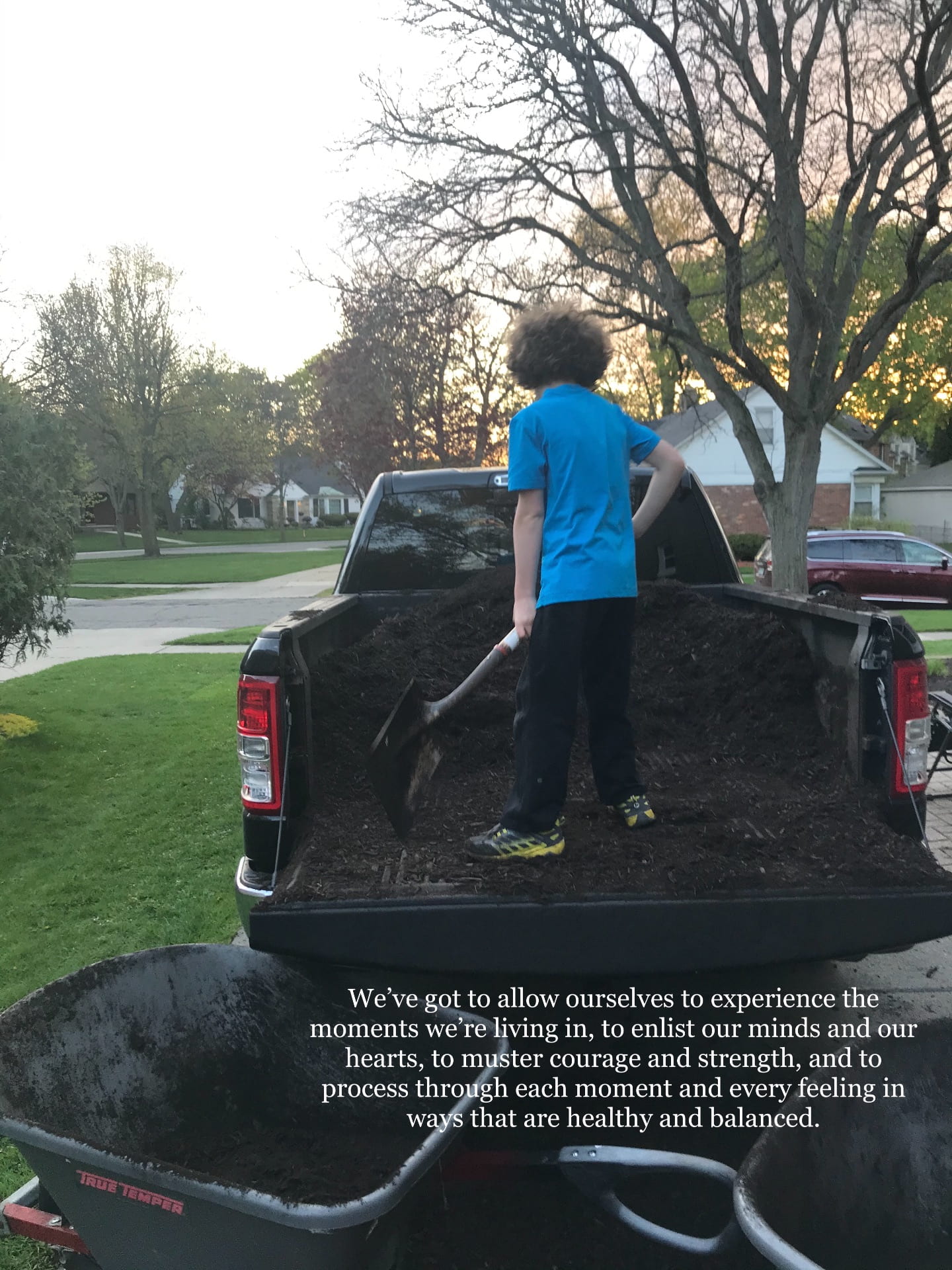
We’ve got to give ourselves time, space, understanding and compassion. We’ve got to allow ourselves to experience the moments we’re living in, to enlist our minds and our hearts, to muster courage and strength, and to process through each moment and every feeling in ways that are healthy and balanced. 

Let’s not be too cautions about sharing our emotional truths. Let’s not turn our heads or our hearts away from those who share their emotional truths to us.  

In this relative isolation, we are truly not alone. We are together in our humanity.

In it together for the kids!

Live. Love. Listen. Learn. Lead. Thanks.
Let Yourselves Off The Hook Parents and Educators

This weekend’s sunshine reminded me of something important.  It reminded me of the ebbs and the flows of being a parent and an educator.  It reminded me that there are triumphant days and that there are challenging days. 

On triumphant days, the kids we’re serving and parenting demonstrate high levels of independence.  They engage in work and play without excessive arguing, fussing or fighting.  They make themselves cereal for breakfast and sandwiches for lunch, they put their dirty dishes in the sink, they put toys away after using them, they flush the toilet and they wash their hand.

On challenging days, our kids argue, fuss and fight.  They don’t even need to be asked to do anything, they crawl out of their beds grumpy, and they grump around all day.  They snap at us, they roll their eyes, they stomp and sulk, and sometimes they growl.  On challenging days, everything feels like a battle, all day long.  

They tell us that they don’t like what we made them for breakfast, lunch, or dinner.  They ask us to make them something different, and then they don’t eat that either.  

On really challenging days they tell us that we’re the “meanest” and that they hate us. 

The thing is, the sun goes up and the sun goes down, and then the sun comes up again.  

This weekend, as I walked with sunshine radiating against my skin and blue skies above, I remembered that, like the sunshine, everything comes and goes. 

Kids are kids.  Each one is unique in many ways, but each one is a kid.  Like us, they have triumphs and they have challenges.  As parents and educators we need to simply be sure that our limbs are inside the rollercoaster car and that the safety bar is securely fastened.  We need to throw our hands up and cheer when we’re racing over hills and around the turns.  

We need to celebrate the triumphs and face the challenges with as much patience and compassion as we can, knowing that with every experience comes opportunities for learning, for them and for us.  

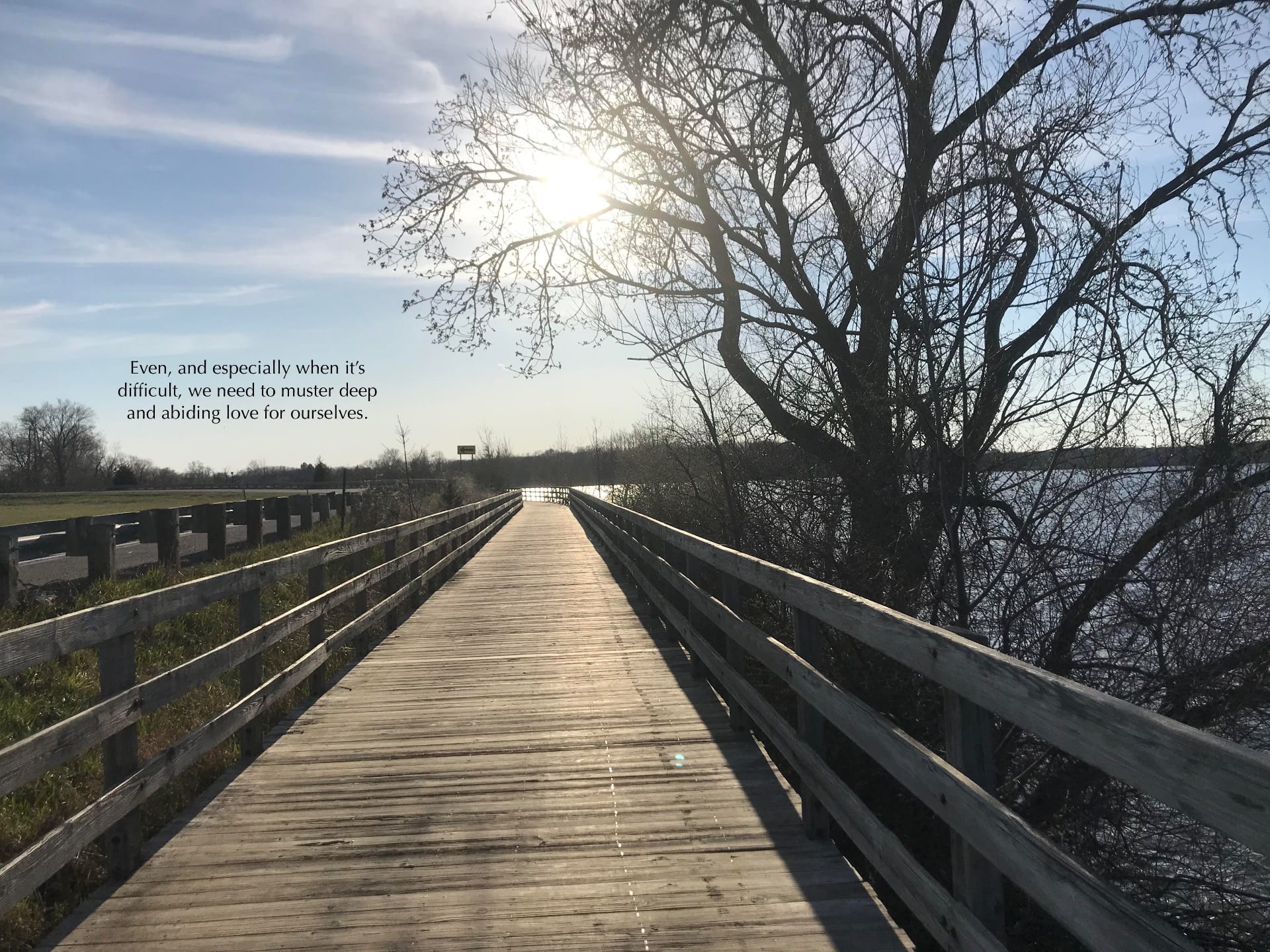
We need to alway remember the deep and abiding love we feel for our kids.  Even, and especially when it’s difficult, we need to muster deep and abiding love for ourselves, and maybe most importantly…we need to let our selves off the hook.

This stuff ain’t easy, but we got it!

In it together for the kids!

Live. Love. Listen. Learn. Lead. Thanks.
Publicly Strutting


I’ve been rollerblading every day since the stay-at-home order was put in place. It’s something I can do without getting near anyone. It’s exercise. I can engage in online meetings and phone calls while I’m doing it. The wind cuts through my hair and I glide as though I’m flying, when the surface is smooth and the slope is down.

It can be exhilarating and it can be fun. It get’s me lost in thought sometimes, which I apprecaite.

It snowed today.

It’s snowed on a couple of other days, too, but today it snowed the kind of snow that doesn’t dry up. It was pretty, but it was wet. It was fluffy until it landed, and then it was puddly. It lasted all day. Rollerblading (even for a guy who tends to find a way unless there truly isn’t one) was out of the question. 

So I walked.

I walked through eight phone conversations and the taping of my daily video message (above).

My glasses were fogged and water cascaded down my face, starting from beads dropping of my hair, and becoming streams running along the contours of my cheeks, water-falling from my chin.

I was sopping. My toes were cold. My feet were sore. 

I was processing guilt, having been away from my family for the bulk of the morning while knowing that when I returned I would have to lock myself away to take on the overflowing communication load that piled up this week.

In a flash, realized my hardships were nothing, shifting the guilt of a few hours away from my family to the guilt of knowing that I have everything I need while so many thousands of people are suffering in unthinkable ways around the world. 

Foggy glasses and cascading water didn’t seem so bad, I wasn’t actually that cold, my feet didn’t hurt so bad.

I had a few blocks left before getting to the front door of a house where my loving kids and wife were playing, and where we would sit down for a nice lunch after I shook the snow off my hair and changed my socks.  

Just a few blocks away from home, after about an hour and half of walking in the snow, Peter Gabriel’s “Red Rain” came creeping into my ear buds from Pandora. 

It crept at first, as it does. It built to a proper pour before long, as it also does, and I noticed I was strutting. 

“Red Rain” was pouring into my ears. The beat overtook me.

The sense that we, humanity, in this moment of extreme challenge, remain kind, compassionate, and individually and collectively strong, invigorated me, and so, I was publicly strutting. 

Walking to the beating drums, chin up and a bounce in my step.

I don’t know if a middle aged man struts publicly because he’s lost in something and confused, or if he does so because something has propelled him into a deepened sense of self and into enhanced clarity. It doesn’t matter. It felt good. 

I din’t mind if people saw. I hoped they did.

We can’t change what we’re going through.

We can’t make it better for those who are out of our reach.

We can take care of ourselves, we can look after our families, and we can stay at home to keep distance to help flattened the curve. 

We can connect by phone, through social media, and by way of loud conversations across lawns so that our hearts remain bonded.

We can project love in as many directions as we can face, and if the mood takes us, even if we’re walking down the street with slushy snow covering our heads and the greatest hits of the eighties pouring into our ears, we can strut.

Live. Love. Listen. Learn. Lead.

In it together for the kids.

Gather Nuts Later

Nuts. 

I imagine it’s what squirrels think about most of the time. 

I stood at the door-wall this morning, looking out over the yard.  I saw a squirrel sitting on the fence. 

There I was, bath robe, pajamas, slippers, sipping a cup of coffee, staring down a squirrel on the fence. 

He was looking at me, too. 

He didn’t seem to be thinking about nuts. 

His face was puckered. His shoulders were slumped.  He seemed deep in thought.  He seemed reflective. He seemed almost contemplative. He seemed, not sad, but maybe disappointed. He seemed remorseful. 

I took another sip.  I wondered what was happening in this squirrel’s life.

Maybe he woke up worried about finding food, with a limited supply of patience and a world of worries.  

Maybe the love he feels for his family had him overwhelmed with concern about how he’s going to provide for them.

Maybe he was frustrated, overwhelmed, and unable to calm his worried mind.

Maybe his kids had been scurrying around that morning, shouting, stomping, playing rough, demanding his attention, and generally showing out in squirrelly ways.

Did he know I was watching him?

Was he actually watching me?

My eyes squinted. 

His tail swished.

My brow raised and then furrowed.

He sighed.

I wondered if maybe his mind was somewhere else.

He took a deep breath, sighed again, and slumped his shoulders even further. 

He looked away.  His gaze shifted to the base of a tree across the yard. I looked over to the tree, too.  A bunch of little squirrels were playing over there.  They were scurrying, they were tagging one another and then running away, there were linking their tails and laughing, they were rolling in the grass, and they were peeling bark off of trees to use for shields in an epic stick-sword battle. 

The little squirrels were having a great time. 

He was still sitting on the fence, still slumped over and looking forlorn.  

He looked at me.  I motioned to the little squirrels frolicking in the yard.  He shrugged his shoulders and pursed his lips. I motioned again and mouthed the words, “Go play with them.”

Even if he had been distracted and upset that morning, worrying about the challenges in his path, maybe feeling helpless and even scared, I thought it could be a good idea for him to play a while. He could gather nuts later.

Maybe some good old fashioned squirrel family fun was just what the doctor ordered.  Maybe it would connect them.  Maybe it would uplift them.  Maybe a couple of moments of play would restore his energy and provide some renewal for a loving family of squirrels during a challenging time. 

I smiled. He smiled. He leapt off the fence and joined the fray. I smiled again. Good stuff. I felt happy.

As I turned to face my day, ready to sit down at the computer for a marathon of messaging and meetings, ready to dig deep into answering, planning, collaborating, coaching, and developing, I heard a noise. It was a joyful noise. The noise was the sound of my kids playing.  

I thought about the stern moments we had already shared that morning. I thought about my frustration, my worry, and my fears. I thought about how all of it came through in the form of a short fuse and sharp communication. 

I thought about who I am at my best and what’s most important to me.

I marveled at the striking similarities between my experience that morning and that of the squirrel who was sitting on the fence. It was uncanny.

A thought occurred to me. I wondered if it might be a decent idea for me to play with my kids for while. I wondered if it might restore and energize me. I wondered if it might strengthen our bond.

I smiled. I set my coffee cup down. I walked past my computer, I climbed the stairs, and I played. I felt happy.

After all, I can always gather nuts later.

In it together for the kids.

Live. Love. Listen. Learn. Lead. Thanks.

Everyone Will Think I’m Just a Painter

We were headed out the door to an event at the synagogue.  Of course, our five year old was wearing his pirate outfit.  It’s a good one.  There’s the lengthy, leathery foundational top coat laden with the silky, frilly accouterments you might see on the uniform of a real fake pirate.  Also, there was a right-sized sword hanging from the loop in his velvety belt.  To his credit, the sword was the centerpiece of the outfit.  Unfortunately, we simply don’t wear swords to the synagogue.  It’s just not done. 

I reminded him.  He brushed past me without acknowledging the reminder.  I called his name.  He didn’t look back.  He marched to the car grasping the sword hilt with one hand, bound and determine to keep the outfit intact.  I smiled in the light of his determination.  He’s strong-willed like his mother (and possibly his father, too).  It could serve him well some day. Off we went.

When we arrived at our destination I told him that the sword wasn’t leaving the truck with us.  He took a deep breath, he executed a precise and overt slumping of the shoulders, and then he sighed.  After an especially moving dramatic pause, and with a distant, forlorn look in his eyes, he said, “Everyone will think I’m just a painter.” 

I smiled again, trying unsuccessfully to hide it from him.  He broke the fourth wall and reflexively smiled back before quickly regaining his footing. 

Despite his best efforts, the possibly misconceived sword-less pirate and would-be a painter, his giggling sister and I walked into the synagogue. 

The idea of “what everyone thinks” is complicate.  It’s difficult to decipher, it seems really important until we understand that it’s not, and it’s almost always relatively concrete until it falls apart under the weight of self-realization.  

That is to say, we don’t really know “what every thinks” or is going to think, “everyone’s” thinking is typically set on a foundation of our own thinking (and projecting), and what others think of us (real or imagined) doesn’t change who we are or set our course in nearly as profound a way as does our own thinking.  Sometimes we think it does, but it doesn’t.  

In other words, it really didn’t matter if  everyone thought the kid was “just a painter?”  He was a pirate. He knew it.  The trick was convincing him of that “father knows best” nonsense. 

At first I thought to espouse the high qualities of painters, thinking I could initiate a paradigm shift that might comfort and instill a sense of pride in him.  Painters are creative, they have sensitivities that connect them to the world in wonderful ways, they generate beautiful works that drive imagination and spur innovation from those inspired by their shared thinking, and so on.  

I stopped short of enacting that reflexive societal instinct.  I wasn’t going to ask the pirate to pretend he was painter.  I shouldn’t.  I couldn’t. 

Fight yourself to work at becoming a thing you think “everyone else” sees you as or want’s you to be.  Try it.  Actually, I’m guessing that at one time or another you have. I would contend the core of a person is simply too strong to refuse, at least while keeping the person intact.  Whenever I’ve attempted to veer from my truest path I’ve been turned back, as if by gravity itself. 

There are many kids of painters and also assortment of pirates, I would guess.  We can certainly learn and we can undoubtedly grow.  We shift and we change in many ways over time.  However, I would suggest that we are each something at the center.  A pirate, a painter, or possibly something else.  

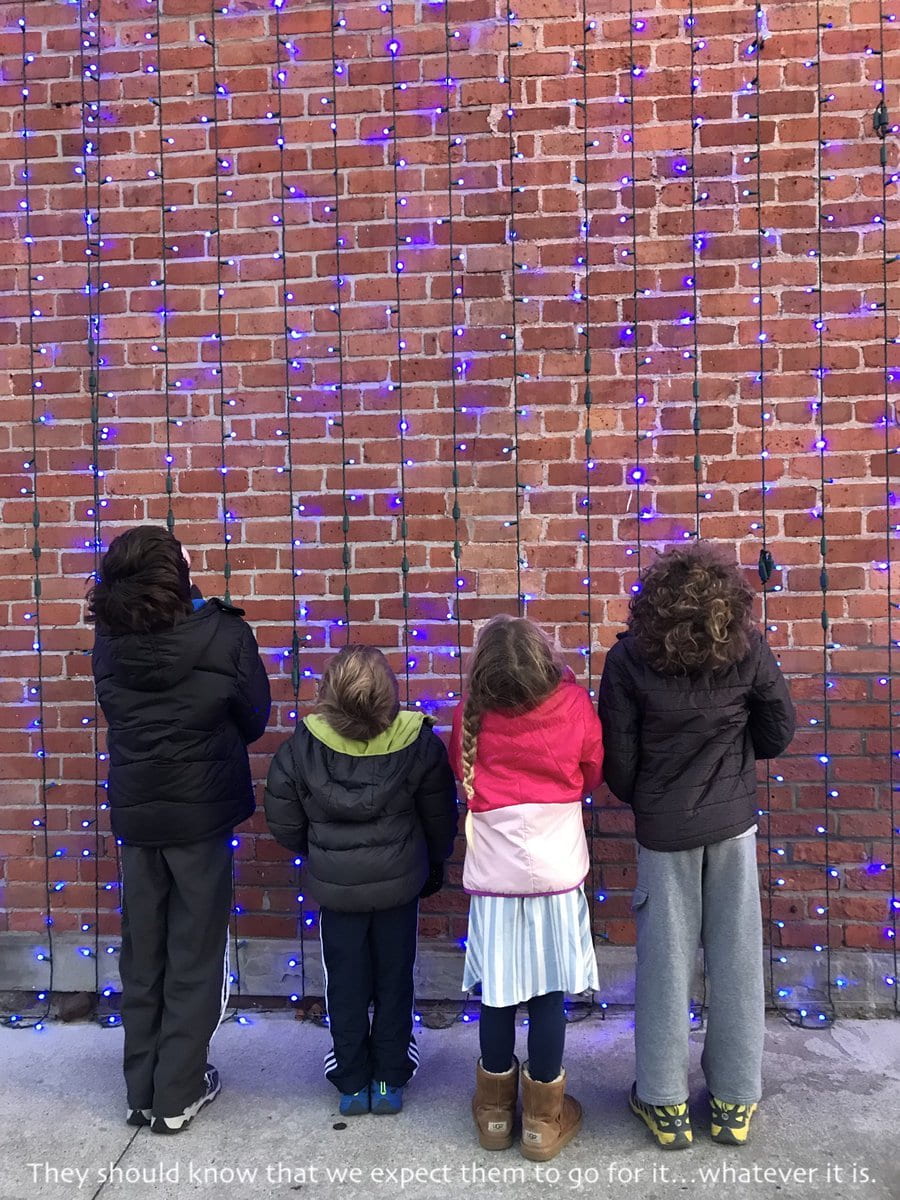
Children should be allowed and encouraged to get messy figuring out what’s at the heart of the matter for them.  They should try things on and see how they fit.  We should help them understand that a full and balanced life comes along with some seemingly limiting expectations (like no swords in the synagogue), but that they must push forward from a foundation of self awareness, resilience, power and pride. They should know that we expect them to go for it…whatever it is.

In it together for the kids.

Live. Love. Listen. Learn. Lead. Thanks.

Moon Hearts, Best Friends To Be, And My Unremarkable Brain

Sometimes my wife and I tell our kids that we love them as much as the moon and the stars.  Sometimes we say we love them with all our hearts.  A few days ago our youngest told me he loves me with all his moon heart.  Even better.  It kind of took my breath away.  I kept the tears at bay, and they were working hard to surface.  

Joy, a fascinating emotion.

We’re blessed with a lot of love in our family.  Love takes many forms.  Sometimes it’s challenging and sometimes it’s flowing, graceful, and easy.  It’s certainly a treat to bare witness as our kids grow into themselves, individually and as a crew, on the foundation of the love we share.  

The other day we were dropping the sister off at a play date.  She has lot’s of those.  She doesn’t have any sisters at home, so instead she has a whole bunch of friend-sisters who she loves and loves to spend time with.  

On the car ride she was pushing every brother button she could push, and even finding some new ones.  The boys were justifiably beyond frustration.  One of them told her he was glad she had so many play dates.  He’s a great big brother and he loves her with all his moon heart, but he’d had enough.  I understood.

We finally arrived.

As she bounced out of her seat and through the threshold of our mini-van door she informed them that, “one day everything will change, we’ll grow up, I won’t torment you like this, and we’ll all be best friends!”  Then she stuck her tongue out, wiggled her bottom in their direction, and skipped over to join her already hoola-hooping, bubble-blowing friend sister with a huge, joyful smile on her face.

I believe part of the comfort she demonstrates in being able to go off and play so often has something to do with her comfort in knowing that home, love, and in particular…the bothers are always there for her when she returns.

I believe the truth is that she knows they’re already best friends, and that she finds sizable joy in the friendships she shares with her wonderful brothers.

This is what I believe, and within the pages of this reflective journal I’ve poured out many beliefs on the foundation of my thinking.  But friends, be careful, I recently found out that my brain is unremarkable.  So, the hundreds of pages of reflective thinking that precede this page are arguably unremarkable, too.  Please read with caution.

I was at a follow up appointment with my neurologist regarding the moment of Transcendental Global Amnesia I enjoyed in December when I got the official word.  I read the report myself.  My brain was described as “unremarkable.”  I had my suspicions but this was official and conclusive.  

I told the doctor that while unsurprised I was deeply offended.  He courtesy laughed.  A nice guy.

He assured me that I want an unremarkable brain.  He told me it’s the kind that nothing’s wrong with.  He told me it’s the kind that lasts.  

Then he told something that didn’t compel the smarmy joke mechanism in my unremarkable brain to trigger.  

He told me that sometimes scary, unsettling things happen for reasons we don’t understand before we investigate and reflect on them only to realize we’re actually alright.

Ain’t it the truth.   

I sometimes yearn to be sensational.  I often look at my children and see them as exceptional.  I occasionally find myself hoping for extraordinary things to happen as I round the corners of this strange journey.

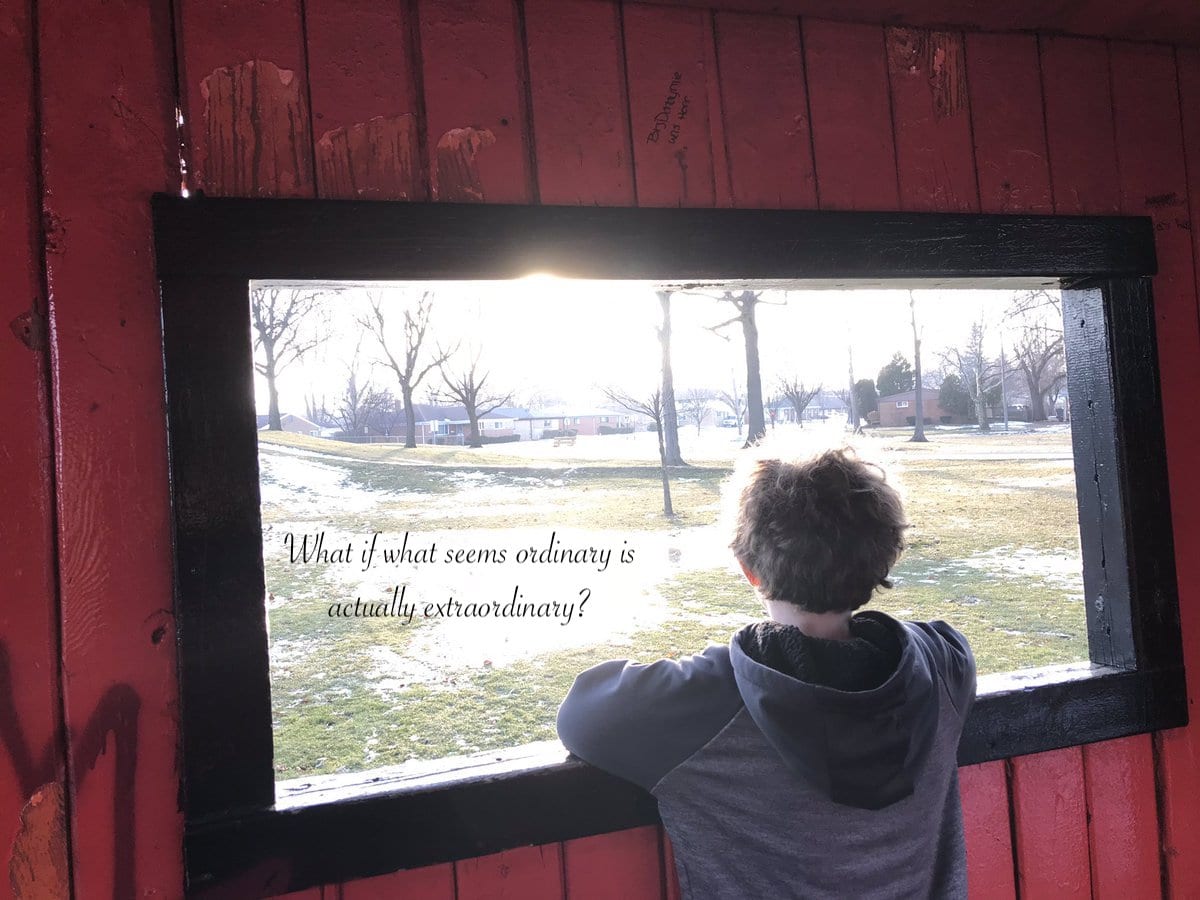
What if moon hearts, best friends to be, and my unremarkable brain are enough?  What if what seems unremarkable is actually remarkable?  What if what seems ordinary is actually extraordinary?  What am I searching for anyway?  What I actually have it? 

“Actually alright.” Enough.

Unremarkable. Joyful. Lasting.

Live. Love. Listen. Learn. Lead. Thanks.